
1. Vacuum More Than You Think You Need To
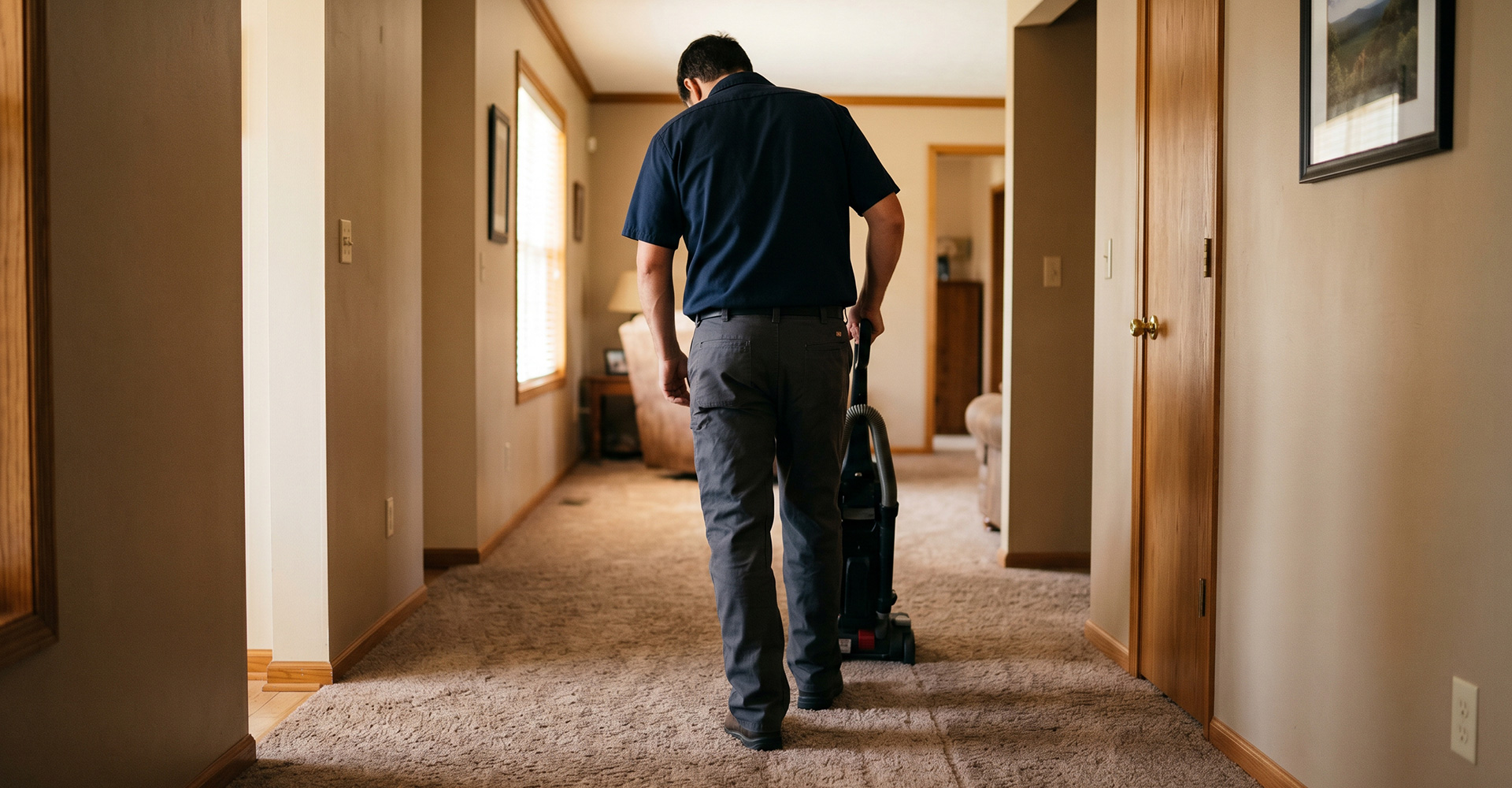
This is the single most important thing you can do for your carpet. Vacuuming 3 to 5 times a week sounds like a lot, but it’s what keeps dirt from settling deep into the fibers where it causes wear and discoloration. Regular vacuuming removes 80 to 90 percent of the soil in your carpet — the stuff that grinds down fibers and dulls the color over time.
If 3 to 5 times feels unrealistic with your schedule, pick the high-traffic areas (hallways, doorways, living room paths) and hit those every other day. That alone makes a noticeable difference.
2. Vacuum Slowly — Speed Matters
A quick pass with the vacuum barely picks up surface debris. Slow, overlapping strokes give the machine time to agitate the fibers and pull dirt out from the base of the carpet. Use a consistent pattern — row by row — and overlap each pass slightly. Think of it like mowing a lawn, not sweeping a sidewalk.
If you’re short on time, one slow pass over the high-traffic areas beats three fast passes over the whole house.
3. Focus Extra Time on High-Traffic Areas
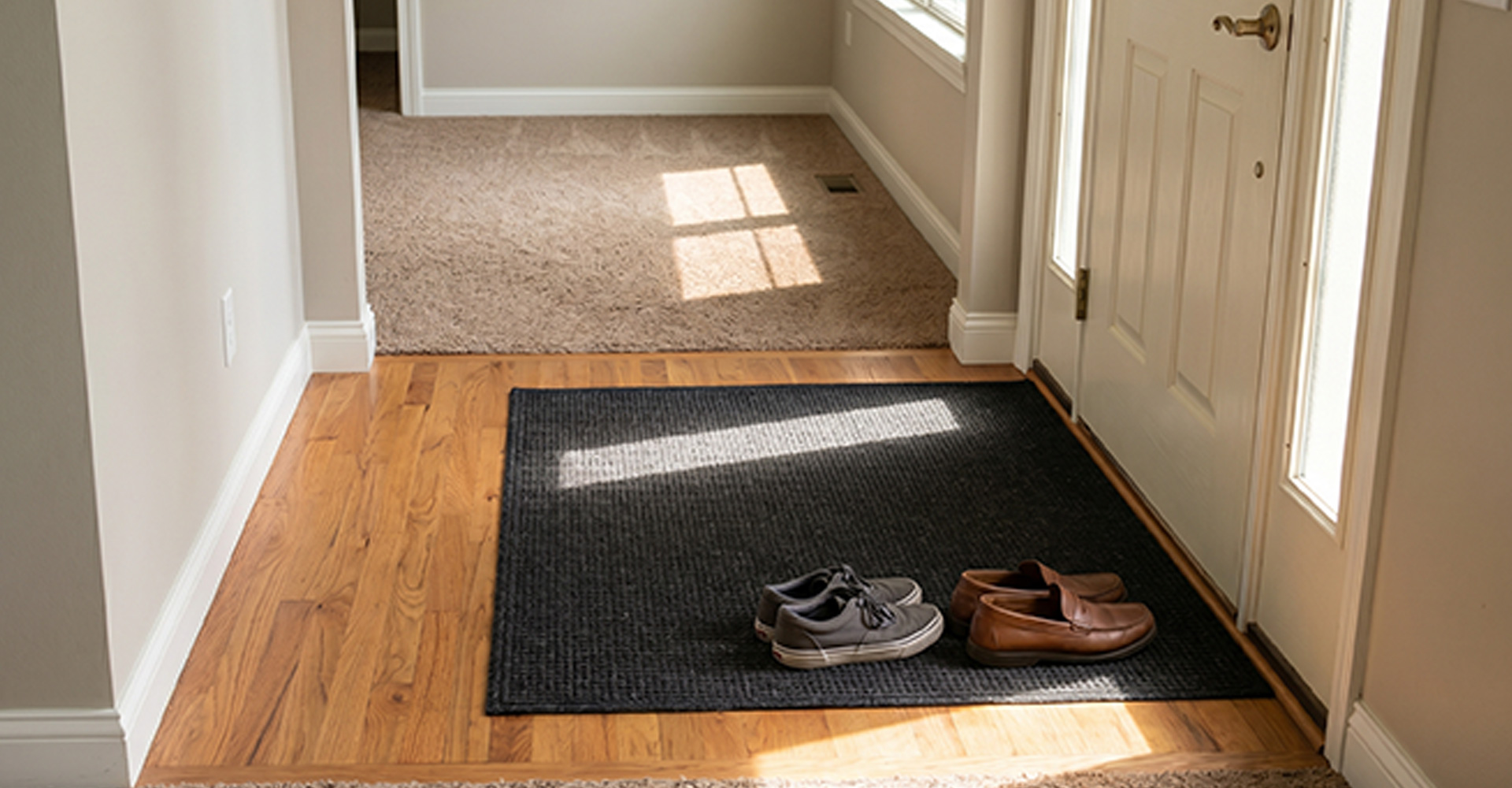
Doorways, hallways, the path between your couch and kitchen — these areas take the most abuse. Spend extra vacuum time on them. If you only have five minutes, clean these zones and skip the rooms that don’t get daily foot traffic.
High-traffic lanes are also where dirt gets pressed deepest, which is why these are the areas that show wear first. Keeping them vacuumed regularly extends the life of your carpet in the spots that matter most.
4. Use Mats at Every Entrance
One of the easiest ways to keep your carpet clean is to stop dirt before it gets inside. Place a mat or outdoor rug at every door that leads outside — front, back, and garage entry. A mat in the garage where you step out of your car catches a surprising amount of grit.
Indoor entry rugs help too, especially if you have a tile-to-carpet transition near the door. Clean your mats regularly — rinse outdoor mats with a hose, and toss washable indoor rugs in the laundry. A dirty mat is just a dirt re-distributor.
5. Use Baking Soda for Light Odor Control
Baking soda is a cheap, safe way to manage carpet odors between professional cleanings. Sprinkle a light layer over the carpet, let it sit for 15 to 20 minutes, then vacuum it up thoroughly. It absorbs odors rather than masking them.
You can also put a small amount of baking soda in your vacuum bag or canister. It keeps the vacuum from developing that stale smell that gets pushed back into the air every time you clean.
This works well for general household odors. If you’re dealing with pet urine, baking soda alone won’t solve it — that usually requires a professional enzyme treatment.
6. Get Professional Steam Cleaning Every 12 to 18 Months
Even the most diligent vacuuming can’t reach everything. Allergens, bacteria, pet dander, and residue from spills build up over time in the carpet backing and padding — below where a vacuum can reach. Professional hot water extraction pulls that embedded material out.
The major carpet manufacturers recommend professional cleaning every 12 to 18 months under normal conditions. If you have pets, kids, or allergy sufferers in the house, every 6 to 12 months is a better target. It’s also required by most carpet warranties — Shaw specifically requires professional cleaning by an IICRC-certified company every 18 to 24 months.
“Julio came to our house the very next day!! He did a spectacular job! He’s a hard worker, very thorough, and was kind and personable. By the way, it cost a little over $200 to get all that carpet cleaned. It looks great!!”

— Judy W., Springfield, MO